
Agriculture is considered a stable area for medium-term and long-term investment, because it is practically guaranteed not only a constant demand for manufactured products, but also its further growth.
Read moreBy investing in agriculture, you are investing in the industry, the products of which have always been in demand and will be in demand in the near future. Agriculture is one of the key sectors of the global economy, ensuring food security for the population and creating broad opportunities for investors. In this text, we will consider the main reasons why agriculture is considered a profitable area for investment.
One of the main factors that makes agriculture attractive for investment is the constant growth of the world population. An increase in the number of inhabitants leads to an increased demand for food, which creates a need for the development of agriculture to meet the needs of society.
Agriculture has enormous potential for production growth and an increase in the output of agricultural products. Investments in agriculture allow the introduction of innovative technologies, increasing productivity, reducing crop losses and improving the quality of products.
Another advantage of agriculture as an investment object is its stability and long-term nature. Investments in agriculture provide relatively low financial risks, since agricultural production is based on the basic needs of a person - food. At the same time, the payback period for investments in agriculture can be quite short - from several years to decades, depending on the specific type of activity.
Modern agriculture is actively introducing innovative technologies, such as digitalization, the use of drones, and process automation. Investors who have invested in the development of the agricultural sector can gain access to advanced agricultural technologies, improve production efficiency, reduce costs and increase business profitability.
Agriculture is a promising area for investment, due to a number of factors, including the growth of the world population, the stability of investments, and the development of technologies. Investing in agriculture not only brings financial benefits, but also contributes to food security for the population and economic growth as a whole.
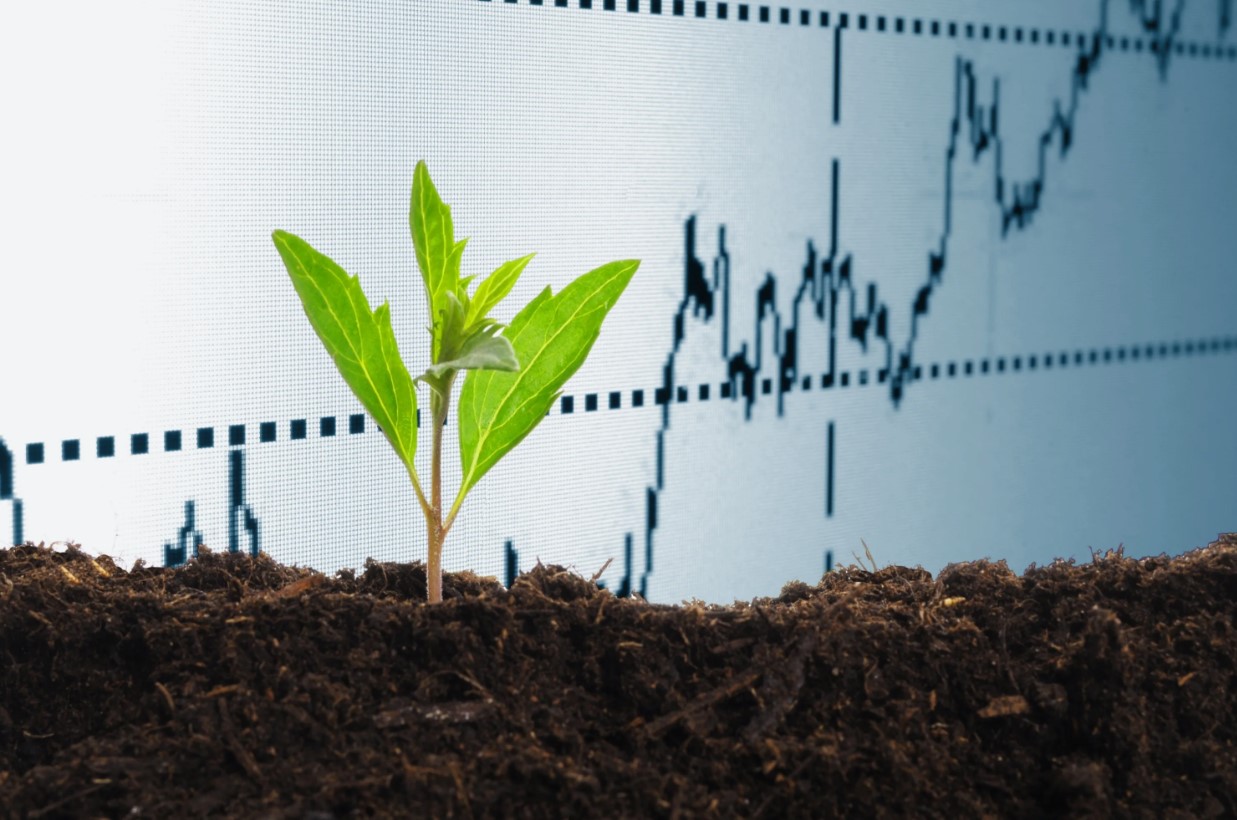
Often, agriculture is one-sidedly understood as only growing agricultural crops and raising livestock. However, agriculture covers a fairly wide range of activities, including livestock farming, horticulture, forestry, seed production, aquaculture, and much more. The purpose of agriculture is to supply products to the population and to cover the needs of producers, that is, to provide them with raw materials.
In this regard, investing in agriculture has many directions that directly and indirectly cover these industries.
An investor in agribusiness can be either a person who bought land outside the city and opened his own sheep farm on it, or a person who invested in a science-intensive startup developing the latest methods of increasing the yield of vegetables and fruits using genetic engineering. This could be an entrepreneur who has purchased agricultural machinery, combines and tractors for rent, or a buyer of shares in companies that produce fertilizers or insect pest control products.
There are a huge number of direct and indirect ways to invest in the agricultural sector.
In the case of direct investments, you invest in material production and sales, and can also participate in the management of the company. Direct investments have a higher entry threshold, and require large amounts of capital.
Purchase of land and organization of a farm. An option for independently starting an agribusiness. The most expensive investment option, in which the investor bears all the risks of implementing the project.
Purchase of real estate for rent. A more passive and reliable investment option, but at the same time requiring a high level of investment. For rent, you can purchase production or warehouse premises.
Provision of loans to agricultural businesses.
Purchase of agricultural machinery for rent.
Purchase of shares in agricultural companies. Many agricultural companies sell shares on stock exchanges, which can be bought and sold in the public domain. An investor can create a portfolio of such stocks that will grow as stock prices increase. With this method, you find a broker that suits you, register and fund a brokerage account, and begin selecting securities. Understanding the variety of offers can be difficult, so you need to analyze company multiples. They can be used to evaluate such indicators as earnings per share growth rates, debt levels, etc.
You should not create a portfolio of stocks of companies operating in the same direction; such a strategy entails large losses if negative factors affect the industry as a whole. The portfolio must be diversified by including different companies, such as those involved in livestock products, logging, fertilizer production, etc.
In the case of indirect investments, you invest through intermediaries. You do not have the right to manage the funds, but only a share in the investment portfolio. Indirect investing is attractive because you can invest smaller amounts, so this option is available to investors with small capital.
Purchase of bonds. Bonds are debt securities that you use to lend to companies to develop their business. The latter, in turn, guarantees you the payment of the face value and interest for using the funds, i.e. coupon income.
For companies, bonds are a more profitable alternative to bank loans, and global businesses resort to issuing bonds. Bonds are considered a reliable way to invest, but their yield is low and amounts to about 5-9%. As a rule, the higher the rate, the lower the reliability of the issuer. Investing using bonds does not require large amounts.
Agricultural ETFs. ETFs are exchange-traded funds, some of which focus on shares of companies in the agricultural sector, i.e. those whose income is generated by the agricultural sector at least 50%. In addition to standard ETFs, there are also funds whose baskets include various types of futures. Such ETF funds may or may not be linked to specific agricultural crops, i.e., for example, futures on beans, raw sugar, etc. are used for short-term investments.
Mutual funds. A popular investment tool abroad. Mutual funds provide an opportunity to invest money in asset portfolios from different countries and companies, and investors can buy and sell fund shares on the stock exchange. The downside is that mutual funds are available from a small number of brokers.
REIT funds. REIT funds specialize in investing in real estate and are attractive because they pay out most of their income in the form of dividends. Some of them are engaged in investments in agricultural real estate. When investing through a fund, you do not need huge amounts, as when purchasing or building real estate. In addition, money can be invested in foreign real estate from various countries of the world.

As in any industry, agriculture as an investment area has its advantages and disadvantages. High returns of 30-50% per annum, which many agricultural companies promise, is a debatable issue, since in practice such results may be completely unattainable. Much depends on specific investment methods and the projects themselves.
However, there are a number of specific parameters that can be accurately attributed to the advantages:
Demand for products and growth in demand. Agricultural products are always in demand, and given the continuing growth of the planet's population, there is an increase in demand.
Rising cost of finished products, which, accordingly, increases investors' income.
Positive impact on the country's economy. Investments in agriculture, in addition to benefits for the investor, help support the economy of the state in which the project operates.
Relatively low competition. In the agricultural sector, entrepreneurs are not as active as in some other areas, for example, in industry.
Of course, there are also disadvantages that repel potential investors. The main disadvantages of investing in the agricultural sector usually include the following:
Dependence on climate and seasonal factors. Despite the introduction of new technologies that allow year-round harvesting on closed farms, agriculture and its indicators largely depend on the climate.
Long payback periods and profitability. This is due to the very process of obtaining products that must first be planted, then grown, then harvested and sold.
Difficulties with sales. A high yield in one agricultural company can usually mean a similar situation in another. Due to increased supply in fruitful years, business profitability will fall significantly.
Lack of insurance guarantees. Due to the influence of a large number of unforeseen factors related to climate on the industry, insurance companies try not to take responsibility for the release of agricultural products.
Low growth in labor productivity. On average, no higher than 2.5% per year.
High costs for depreciation and equipment renewal, which reduces business profitability. It is also necessary to regularly invest in improving varieties of agricultural plants in order to keep up with competitors. Serious analytical work. It is often necessary to study investment objects on the spot, since there is either no information in the public domain or very little. And the mechanisms for investing in the agricultural sector themselves are poorly developed.
Due to the diversity of agricultural areas and investment instruments, there is no single algorithm that guarantees high returns to investors. Therefore, the matter is limited to only general recommendations:
Assess your financial capabilities. A mandatory step before any type of investment is calculating all income and expenses, including a forecast for the future. If an ordinary investor with a small capital will only need a piece of paper, a calculator and a pen, then business representatives should use the services of an accountant.
Creating a financial safety cushion. You should not start investing if you have debts and loans, or without a safety cushion. The minimum size of a financial cushion is a three-month supply of funds for all your expenses, the optimal size is six months. Funds can be stored in foreign currency or a savings account.
Determining investment goals. Goals may be different. Some people prioritize preserving funds, others - increasing capital, and others - receiving passive income. The main feature of any goal is that it should have clear deadlines.
Identifying risks. Each project and investment instrument has its own weaknesses and risks. Carefully analyze the performance of the companies you have chosen, and if necessary, involve experienced investment consultants.
Defining your own strategy. You must define your investment strategy in advance. Whether you will adhere to a more conservative strategy aimed at saving funds, choose a moderate risk strategy or behave more riskily, all this depends only on your decision.
Selecting a project for investment. Having compared the performance indicators of different investment projects, evaluate their potential profit and choose the most promising ones.
Then, having completed all the steps listed, you can directly engage in investing capital and related issues. In this case, it is worth considering the main rule of investing, which states: "Do not invest as much as you would be upset to lose".
An excellent resource that highlights the importance of diversification and long-term planning. The real-world examples help demystify the principles of sound investing.
Well-written and thoroughly researched, this piece sheds light on emerging trends in finance and provides actionable advice to optimize investment returns.
After reading the article, I learned a lot of interesting information. Thanks to the author that financial issues are disclosed in all details and in a language understandable enough for beginner financiers.